In chapters 16-29 of "Modoc", the author, Ralph Helfer, emphasizes that although Bram and his elephant, Modoc are on the run from Mr. North in India, their unfailing love and trust gives them the power and courage to survive. When Bram wakes up in an Indian hospital after the shipwreck, he escapes the doctors' watchful eyes and sets out to find Modoc. He locates her in the Kismet Royal Elephantarium, a few miles away. As Bram nurses Modoc back to health, he becomes very good friends with the powerful maharajah, the renowned owner of the Elephantarium. Helfer notes that when Bram learns the circus owner, Mr. North is on a mission to re-claim Modoc as his own, he knows he must take Mo and escape deep into India. The maharajah proclaims Bram to be his favorite 'son' and gives him a medallion with the maharajah's royal family crest and Bram's name. Helfer explains that the crest is known and respected all throughout India and it will help him in his travels as he flees from Mr. North. Before Bram leaves with Modoc, the maharajah gives Bram the great honor to meet Atoul. Helfer informs the readers that Atoul is the quintessential elephant who has spiritual influence over the mind. He teaches Bram how to hear nature's voice, and to let it guide him in all aspects of his life. Bram leaves his new home at the Elephantarium and sets out to find the teak forests, where he can work as a mahout with Modoc and hide from Mr. North. When Bram and Modoc finally arrive at the teak forests, Bram is offered a test. In order to become a mahout, or elephant driver in the forests, Bram will have to perform a series of tasks to the star worker, Kalli Gooma's satisfaction. As Bram trains, he falls in love with a local girl named Sian. However, they cannot be married because of the difference in their religions. When Sian's father discovers the maharajah's medallion, he changes his mind and decides Bram is indeed worthy of his daughter and allows them to be married. Bram passes his test and becomes an assistant to Kalli Gooma to train to become a mahout. Helfer states that as the years pass and everything seems to be going perfect for Bram and Modoc, a group of rebels suddenly take over the village and force the townspeople to help them cross the mountains.
A mahout and his elephant in the teak forests
Helfer, Ralph. Modoc: The True Story of the Greatest Elephant That Ever Lived. New York: HarperCollinsPublishers, 1997. Print.
Essential Question: Should animal abusers be punished more harshly?
Claim: Animal abusers should be punished more harshly because of the lasting, damaging effects on the animals.
Campaign to stop animal abuse
Reason: Animals have lasting psychological effects of animal abuse. Some animals will be traumatized for the rest of their lives from their owners mistreatment. They may act hostility towards humans in general because of their distrust for their owners. Animals can become closed off to the world and lose the will to live. The only thing that can save them is stopping animal abuse. By making the punishments more harsh people will see that abusing animals is not worth it. The punishments must also be followed through with. The perpetrators must be shown that they will receive no leeway in their sentence and will not be let out of jail or prison early. Hopefully, by showing the public how harsh the punishments can be, animal abusers world-wide will realize the illegality and horrificness of their actions.
In chapters 1-15 of "Modoc", by Ralph Helfer, Bram has to leave his widowed mother behind in order to chase after, and fight for his soul mate, Modoc the elephant. Bram and Modoc were born within the same hour on the same day. Helfer shows that as the two friends grow and mature together, their friendship deepens and becomes as strong as steel. They become so interconnected, that Modoc saves Bram's life by sensing he is dangerously ill. Helfer informs the readers that all of Bram's ancestors were animal trainers for the circus. Bram's father, Josef, taught him how to be an elephant trainer since the day he and Modoc were born. According to Helfer, his father's teachings show Bram the importance of training animals with love and respect, not discipline and pain. When the circus is sold to an American businessman, the animals must be shipped to the United States, leaving all of the old circus workers jobless. They stay in Bram's family barn where young Modoc once lived. Josef's health is deteriorating fast, and his death is imminent. Helfer implies that the cause of Josef's illness is the stress of worrying about what will become of the circus, now that it has been sold to a new owner. When Modoc and the rest of the circus animals get loaded onto a boat headed for America, the now fatherless Bram stows away and risks his life in order to be with Modoc. A violent storm soon hits the ship in the Indian Ocean. The author describes the hurricane as having huge swelling waves and a downpour of rain. The storm rips a hole in the side of the vessel and rips Bram from Modoc's tight grip. They are reunited once more when Modoc appears on the top of a nearby swell. Helfer notes that Modoc saves thirty four lives by letting them lay on her back as she floats over the waves. After days of floating at sea, a ship comes and rescues the humans. Since they don't have a big enough ship for Modoc, Bram decides to stay with her in the ocean. Helfer concludes by saying that when the two friends decide to give up their hope for survival, an enormous ship saves them and brings them safely back to land.
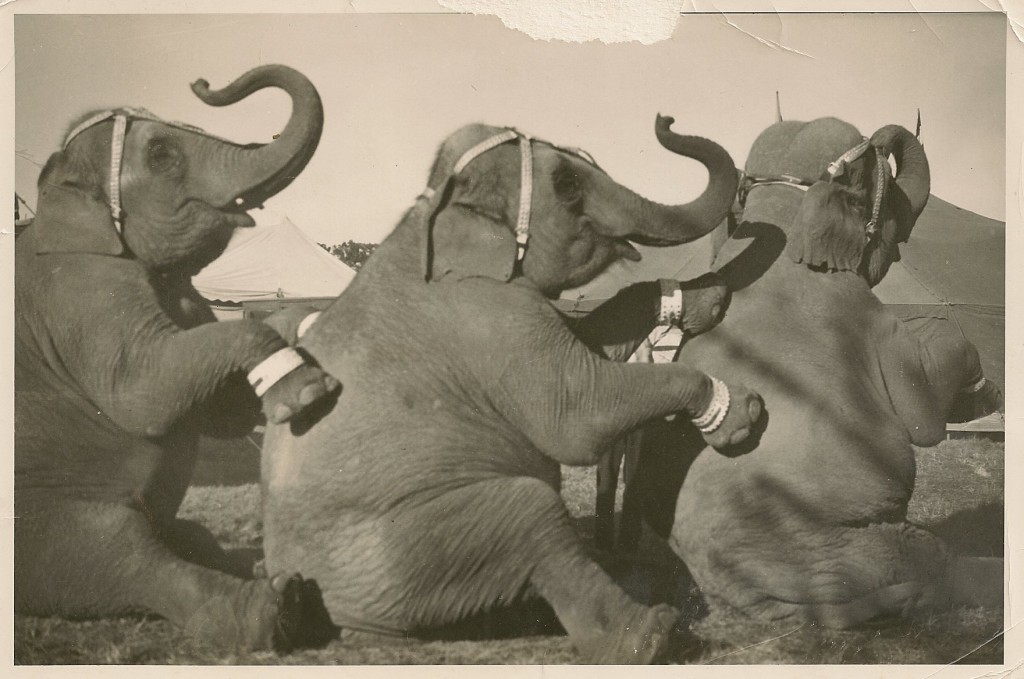
Modoc (middle) performing her routine in the circus
Helfer, Ralph. Modoc: The True Story of the Greatest Elephant That Ever Lived. New York: HarperCollinsPublishers, 1997. Print.
We were surprised by not getting any results. Our link lead to the survey but would not record our results for us to see. I would assume that most people know a good amount about animal abuse. You can always give us personal feedback by commenting on this post!
Uncle Al blackmailed Jacob to get August and Marlena back together because he did not want to lose the stars of his show. Uncle Al fears that August and Marlena will quit the circus if they get a divorce; they are his main attraction, and without them, his circus would go bankrupt. Marlena is exceptionally beautiful and alluring to the male audience. Her timeless act with Rosie the elephant is the most anticipated performance of the show, drawing audiences of all ages. Her husband, August, is the Equestrian Director and Superintendent of Animals. August directs the entire circus show, from start to finish. Under his command, Uncle Al's circus has become profitable and successful. August is, therefore, the glue that holds it all together. Uncle Al knows that he can not lose August and Marlena. He also knows that Jacob is hiding Camel, preventing him from being redlighted. He uses this knowledge as leverage to blackmail Jacob into getting his two prized performers back together. Uncle Al says, "'Did you really think you could keep a stowaway without me finding out about it?'...'Sometimes an individual has to make a sacrifice for the good of the rest of us. And what this family needs is for August and Marlena to work things out. Do we understand each other?'...'Yes, sir,' I say eventually. 'I believe we do'" (Gruen 267). Jacob is one of the few circus employees who August likes and trusts. Jacob has an "in" with August that no one else has. August is a paranoid schizophrenic. He has sporadic outbursts of anger and violence towards anyone who sets him off. All of the working men on the circus fear him. If Uncle Al loses August, he will lose his fear factor that kept all of the laborers in line. Uncle Al has an opportunity to use Jacob to his benefit, and he takes it. His hope is that Jacob will use his closeness to August and Marlena to con them into a loving relationship once more. His circus stars will continue performing, and Uncle Al will continue to profit. Afterall, the show must go on.
Discuss a possible
consequence of Jacob hiding Camel in his room on the train with Kinko in Water for Elephants.
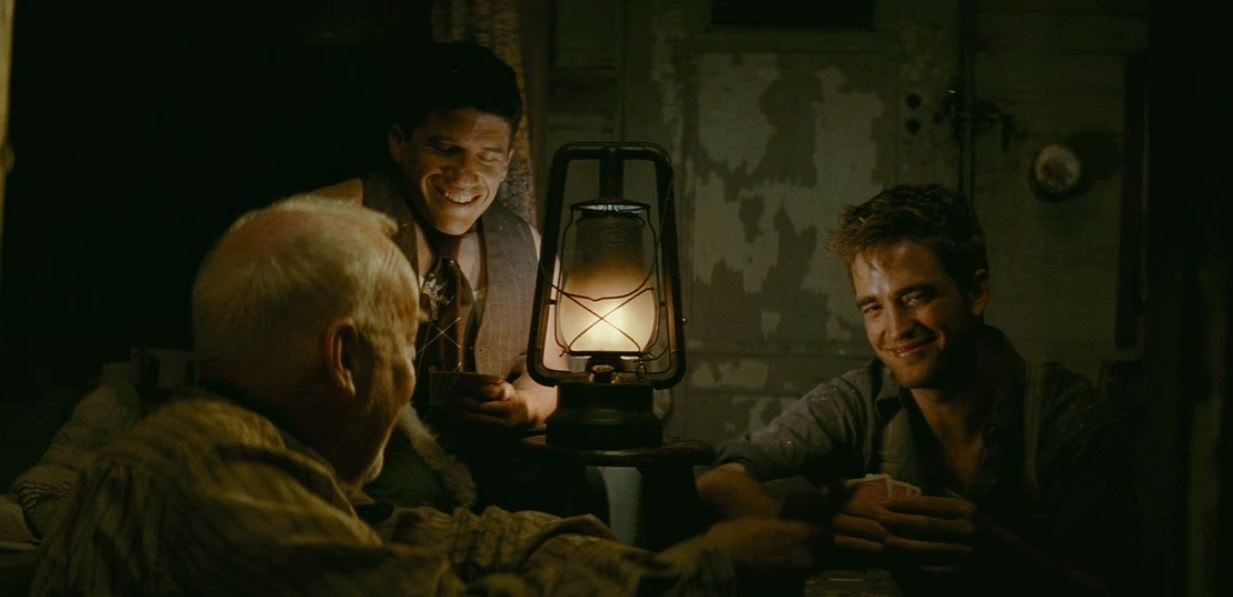
Camel, Kinko, and Jacob in their room on the train
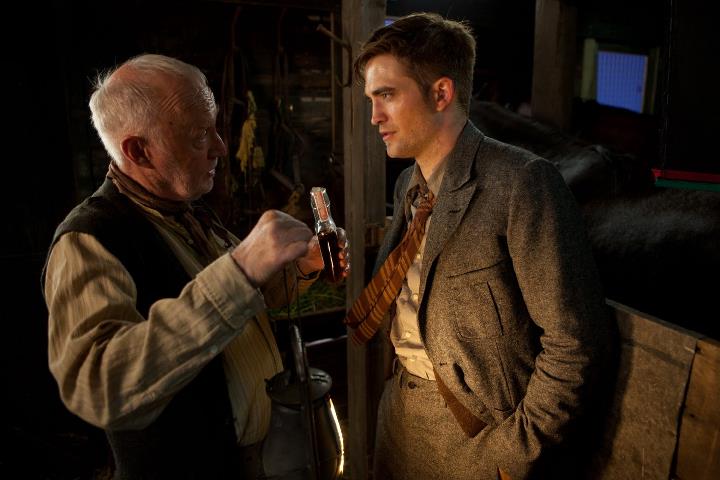
Camel helping Jacob fit into the circus life
A possible repercussion of
Jacob deciding to hide Camel in his room with Kinko is all three men being forcibly
“redlighted”. Hiding
Camel is a direct violation of Uncle Al’s orders to have Camel redlighted, or
thrown off of the moving train, because Uncle Al considers Camel to be
worthless. Since Jacob and Kinko disobey Uncle Al to save Camel, they risk being thrown off the train
themselves. Uncle Al, the Circus
manager, has every working man on the circus redlighted if they
are unable to do their jobs due to sickness or injury. He is a
ruthless person, with little care for others.
Camel, an old-aged circus laborer, recently became paralyzed from
drinking a tainted bottle of “Jake”, or Jamaica Ginger Extract, a hand-made
alcohol. As he loses feeling in his
limbs, it becomes very apparent to everyone that he is useless as a circus
working man. He is at great risk of
being redlighted by Uncle Al. Jacob, who
has developed a deep bond of friendship with Camel, takes pity on him and conceals him behind trunks in his room. He
desperately wants to help the man who stood up for him during his first harsh
days working for the circus. Camel also
helped secure Jacob his job as circus veterinarian. The circus performer, Kinko, who shares the room
with Jacob, helps hide Camel as well.
Like Jacob, Kinko cares about Camel and pities his situation. Jacob and Kinko are well aware that they can’t
hide Camel in their room forever, but they are hoping to hide him at least long
enough to get Camel off of the train to safety.
And in doing so, they are putting themselves at great risk for being redlighted along with Camel. Jacob says to
Kinko,”’I want to bring [Camel] here.’ ‘What?’
‘He’s going to get redlighted otherwise. His friends had to hide him behind a roll of
canvas last night.’ ‘All right. Bring
him on over. Don’t let anyone see you or
we’ll all catch hell’” (Gruen 192).
Jacob and Kinko are willing to put their lives on the line to help shelter Camel in their room. They have been a
part of the circus long enough to know that Uncle Al does not give a second
thought about redlighting his workers. However, they also know that Uncle Al
will do so only if he owes them money, or they have angered him in some
fashion. They believe that if they can
keep Camel hidden long enough for him to escape the circus to his family, the
three of them will be spared. On the other hand, if any man in the circus finds Camel in their room and tells Uncle Al, the three roommates
will most likely be “removed” from the scene. Jacob and Kinko's noble act of bravery shows they both have hearts as large as an elephant. They were willing to risk their lives to save a friend from his horrific fate.Although the three men may quarrel and fight, their decision formed a bond between them so strong, that even redlighting can not break it.
Discuss Jacob's motives for hating Joseph McGuinty in Water for Elephants and explain how Marlena relates to his hatred.
Young Jacob and Marlena
Elderly Jacob
Jacob despises Joseph McGuinty because he causes Jacob's painful memories of his circus days and lost love, Marlena, to resurface. Joseph McGuinty is an old man in Jacob's nursing home for the elderly who lies to Jacob's friends about giving water to elephants when he was younger. This sparks up feelings and memories deep inside Jacob that he has been repressing for years. In his youth, Jacob was the Benzini Brothers Circus veterinarian. His most cherished animal in the circus was Rosie the elephant, who he would give water to daily. When McGuinty lies about giving water to elephants, Jacob becomes furious, but keeps his reasons a secret. He desperately wants to talk with his friends about McGuinty's lies, but in doing so, he would reveal his troubled past with the circus. At first, Jacob loved his job of working with the circus animals, but the situation changed dramatically. One evening, the circus exploded into a crazed panic. Exotic animals and fleeing civilians ran wildly about, trying to escape the pandemonium. During the craze, Jacob finds the woman he loves, Marlena, in the act of murdering the circus' leader. "She lifted the stake high in the air and brought it down, splitting his head like a watermelon... So long ago. But it still haunts me. I don't talk much about those days... 'I used to carry water for elephants' says McGuinty. 'You did not.' I say" (Gruen 9). That traumatic night was the culmination of months of love, hardship, and suffering, but Jacob will never be able to talk about it. He would love nothing better than to set the record straight with McGuinty about circus life, however, as frustrating as it is, Jacob must continue to keep his beloved's past a secret. The circus is where Jacob fell in love with animals, but more importantly, Marlena, the love of his life. McGuinty's bragging lies about the circus offend Jacob, because the circus was such an important part of his life. It is where he became a man, where he became passionate about being a veterinarian, and where he found true love. Jacob's life experience in the circus defined his future, creating the man that he would later become with the woman he would always love. Those days are important, yet painful to him, so McGuinty's false circus stories belittled Jacobs past and insulted his memories.
Malcolm Gladwell is a very interesting man. He believes that not everything is as it seems to be. He carefully analyzes everything in his life. In all three of Gladwell's Ted Talks, there was an unexpected twist. The first Ted Talk was about a man named Howard who had a brilliant idea, but no one would listen. He ended up making a spaghetti company millions of dollars. In the second Ted Talk, Norden's Bomb Device was made for good purposes. It was supposed to lower the rate of random misfires and deaths due to an outdated targeting system, but it ended up being used to mass murder thousands of Japanese citizens with a nuclear bomb. The third Ted Talk was about the story of David and Goliath. Goliath seems to be a huge, menacing warrior while in reality he was actually visually impaired. David seemed to be the underdog in the situation against Goliath but he managed to win through his skill and intelligence.
The "Warren Harding Error" is about a man named Warren Harding who came into power based solely on his handsome appearance and professional demeanor. United States citizens fell in love with him and elected him based mostly on his physical attributes. He turned out to be one of the worst presidents in American history. Gladwell's takeaway message is do not judge a book by its cover; someone or something that may seem foolish can actually shine like gold when given the chance.
Students in Class
An example of another topic worth considering is the perplexing question of why do certain students sit at the front and back of the classroom on the first day of school? There are many reasons for why students sit where they do. There are three types of students: the shy, the social, and the studious. The shy and social children tend to sit at the back of the classroom on the first day. This could be due to the shy students not wanting to socialize with the new teacher. The social kids sit in the back of the room because they think they can get away with talking and eating without the teacher's knowledge. The studious students tend to sit towards the front of the room to get to know the teacher and to see how they will run their class in the future.